
Menu
Is Isostearic Acid Comedogenic? What Formulators Should Know
The Question Every Skin Care Formulator Eventually Asks
When a new ingredient enters the formulation toolkit, the first technical question is about performance. The second, especially in skin care, is almost always: will this clog pores?
For isostearic acid, that question comes up regularly. Its name sounds similar to stearic acid, which many formulators know has a moderate comedogenic rating. The assumption that both acids behave the same way is not accurate. The structural difference between them creates meaningfully different behaviour on skin, and understanding that difference matters for any formulator working on face products, scalp treatments, or acne-prone skin lines.
This blog addresses the comedogenic question directly and explains what formulators need to know before using isostearic acid in skin or hair care formulations.
What Comedogenic Actually Means
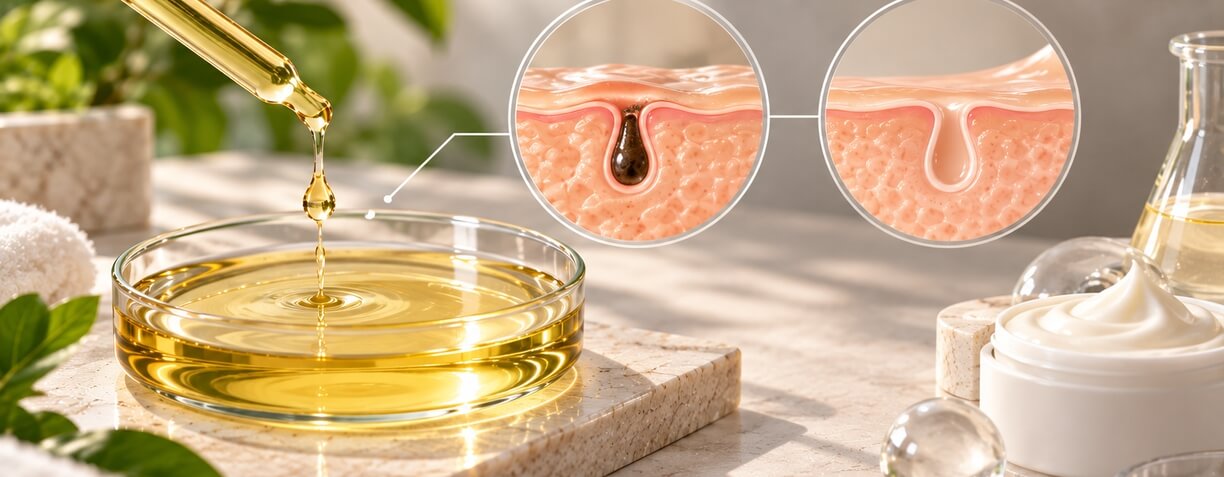
Comedogenicity refers to the tendency of a substance to block pores and contribute to comedone formation, the clogged follicles that appear as blackheads or whiteheads. Ingredients are typically rated on a zero-to-five scale where zero indicates no pore-clogging tendency and five indicates high blockage likelihood.
This rating system has practical value but also limits. The ratings were largely developed through rabbit ear assays, a method now considered an imperfect predictor of human skin response. Human skin varies in type, condition, and sensitivity. The concentration in a finished formulation matters as much as the ingredient’s individual rating. An ingredient with a moderate rating used at low concentration in a balanced formula may cause no issue at all. The comedogenic question is always more nuanced than a single number suggests.
Is Isostearic Acid Comedogenic? What the Ratings Say
Isostearic acid comedogenic ratings in cosmetic ingredient databases typically fall in the range of one to two on the standard zero-to-five scale. This places it in the low to very low comedogenic category.
To put that in context, mineral oil is rated zero to one. Regular stearic acid is typically rated two to three. Coconut oil, widely used in natural skin care but known for pore-clogging in many skin types, is rated four. Isostearic acid sits well below these more problematic ingredients in terms of pore-blocking potential.
The reason isostearic acid scores lower than stearic acid comes directly from its molecular structure. Stearic acid has a straight carbon chain that packs closely with other molecules, making it more occlusive on the skin surface. Isostearic acid has a branched carbon chain that prevents this tight packing. It sits more lightly on the skin, allows for better skin respiration, and does not create the same occlusive film that higher-rated fatty acids do.
This structural difference is exactly why formulators working on non-comedogenic and acne-safe product lines find isostearic acid a far more workable option than its straight-chain counterpart.
Why Formulators in India Are Choosing Isostearic Acid for Sensitive Skin Lines
The Indian personal care market has seen significant growth in skin care categories targeting sensitive, oily, and acne-prone skin. Consumers in cities like Hyderabad, Kolkata, Surat, and Indore are increasingly informed about ingredients, and brands are under growing pressure to formulate products that are both effective and safe for reactive skin types.
For product development teams working in this space, the ingredient list needs to include emollients that deliver moisturisation and texture without increasing breakout risk. This is where isostearic acid as an oleochemical ingredient earns its place.
Its low comedogenic profile makes it suitable for use in face moisturisers, primers, BB creams, and sunscreens where the end user may have oily or combination skin. Its non-greasy spread means the finished product does not feel heavy or occlusive even when applied over the full face. And its compatibility with niacinamide, hyaluronic acid, SPF actives, and conditioning polymers makes it a versatile base across many formulation types used in sensitive skin care.
Personal care manufacturers in Hyderabad’s growing cosmetics cluster and Surat’s personal care production hubs have been adding isostearic acid to ingredient shortlists specifically because it works across a wide skin type range without triggering the sensitivity concerns associated with heavier oleochemical bases.
Isostearic Acid for Hair: The Same Low-Irritation Profile Applies
The low comedogenic and low irritation profile of isostearic acid extends to scalp care applications as well. Isostearic acid for hair products, particularly scalp serums, leave-in treatments, and conditioning oils, benefits from the same properties that make it suitable for face applications.
The scalp has a high density of follicles, and heavy or occlusive ingredients applied to the scalp can contribute to follicle blockage, product build-up, and in some cases scalp sensitivity. A lightweight emollient like isostearic acid that delivers conditioning and moisture retention without sitting heavily on the scalp surface is a practical formulation choice for scalp health products.
Formulators in Kolkata and Indore working on professional hair care and scalp treatment lines for oily scalp concerns are among those who have adopted isostearic acid as part of their conditioning system specifically because of its light, non-clogging behaviour.
What Formulators Should Check Before Using Isostearic Acid
While isostearic acid’s low comedogenic rating makes it broadly suitable for sensitive and acne-prone skin formulations, there are a few practical points formulators should work through before finalising their formulation:
Use level matters. Concentration in the finished formula affects performance and tolerability. Higher use levels in oil-heavy or anhydrous systems should be evaluated through stability and consumer testing before finalising.
Interaction with other ingredients. The formula’s overall comedogenic profile depends on every ingredient in it. Pairing isostearic acid with other low-rated ingredients creates a safer system than combining it with high-rated oils or occlusive waxes.
Supplier grade and purity. Colour grade, residual impurities, and acid value consistency in the raw material affect both aesthetic performance and tolerability in sensitive skin applications. Sourcing from a certified producer with batch-level documentation is not optional for regulated personal care applications.
Fairchem Organics Limited: A Certified Source for Isostearic Acid in India
Fairchem Organics Limited, based in Sanand, Ahmedabad, produces isostearic acid from vegetable oil by-product streams including soya, sunflower, corn, rice bran, and rapeseed. As a specialty oleochemical ingredients producer with over three decades of manufacturing experience, Fairchem supplies isostearic acid to personal care manufacturers across India and in international markets in Asia, Europe, and the Americas.
Every batch is produced through a controlled dimerisation and isomerisation process and tested for consistent colour grade, acid value, and performance characteristics before despatch. The company holds REACH Compliance, HALAL, Kosher, DUNS, ISO 9001, ISO 14001, ISO 45001, and Bureau Veritas certifications, making it a qualified supplier for regulated personal care industries working on domestic and export product lines.
For personal care formulation teams in Hyderabad, Kolkata, Surat, and Indore who need a certified, consistent source of specialty-grade isostearic acid, Fairchem is a manufacturer worth contacting directly.
Ready to Add Isostearic Acid to Your Skin or Hair Care Formulation?
Whether you are a formulation chemist in Hyderabad working on a new sensitive skin moisturiser, a product development team in Kolkata building a scalp care line, or a procurement manager in Surat or Indore evaluating specialty oleochemical ingredient sources, Fairchem Organics Limited is ready to support your requirements.
Our isostearic acid is produced from renewable vegetable oil sources, certified to international standards, and backed by full batch documentation. Get in touch today for product specifications, grade recommendations for your application, and pricing.
For sales enquiries: comm@fairchem.in
Call us: +91 2717-687900 / 687901 | +91 90163 24095
5 Trending FAQs on Isostearic Acid Comedogenicity
Q1: What is the comedogenic rating of isostearic acid?
Isostearic acid is generally rated one to two on the standard comedogenic scale of zero to five. This places it in the low category, making it significantly less likely to clog pores compared to ingredients like coconut oil (rated four) or standard stearic acid (rated two to three).
Q2: Can isostearic acid be used in formulations for acne-prone skin?
Yes. Its low comedogenic rating and non-occlusive skin feel make it a suitable emollient for formulations targeting oily, combination, and acne-prone skin. As with any ingredient, the concentration used and the overall formulation system should be assessed through stability and consumer testing before commercial launch.
Q3: Why does isostearic acid have a lower comedogenic rating than stearic acid?
The difference comes from molecular structure. Stearic acid has a straight carbon chain that packs closely on the skin surface, creating a more occlusive film. Isostearic acid has a branched chain that sits more lightly on skin, allows better skin respiration, and does not form the same pore-blocking layer that straight-chain fatty acids can create.
Q4: Is isostearic acid suitable for scalp care products targeting oily scalps?
Yes. Its low follicle-blocking tendency and lightweight conditioning performance make it a practical choice for scalp treatment products where heavier conditioning oils would be unsuitable. It conditions and moisturises without creating build-up on the scalp or follicle openings.
Q5: Where can personal care manufacturers in India source non-comedogenic grade isostearic acid?
Specialty oleochemical producers in Gujarat, particularly in and around the Ahmedabad manufacturing cluster, produce personal care-grade isostearic acid from vegetable oil sources. Buyers should verify REACH, HALAL, Kosher, and ISO certifications, and request batch-level certificates of analysis to confirm colour grade and acid value consistency before qualifying a supplier.