
Menu
Dimer Acid Uses in Paints, Inks and Adhesives: Why Indian Manufacturers Are Scaling Up
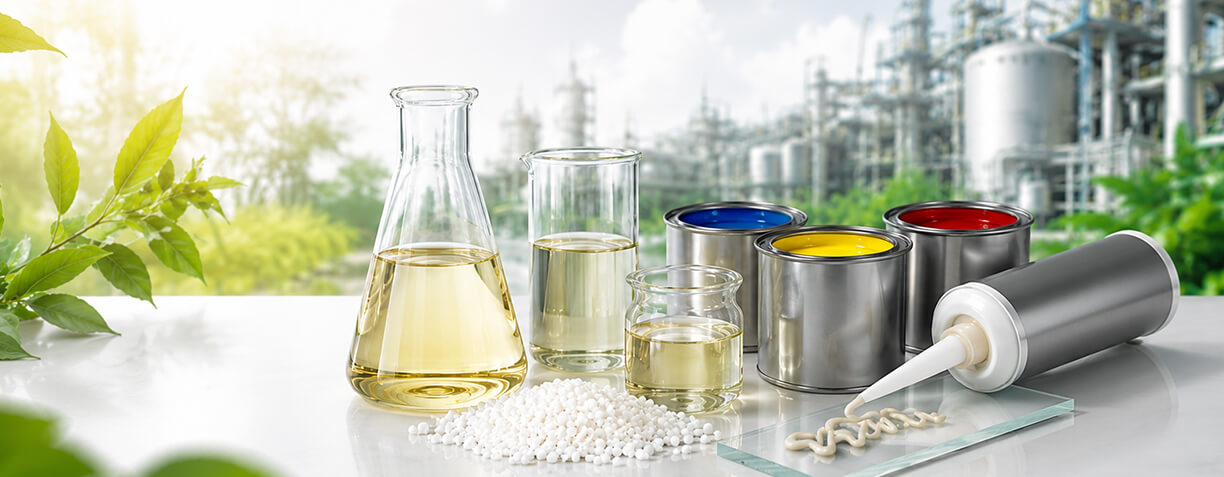
The Ingredient Behind Some of the Toughest Industrial Formulations
There are certain raw materials in the chemical industry that do not get much public attention but quietly hold entire product categories together. Dimer acid is one of them.
If you have ever seen a metal bridge that has not rusted despite years of exposure, a printed label that stays sharp after months in a warehouse, or an industrial adhesive that holds a structural joint through temperature extremes, there is a good chance dimer acid played a role somewhere in making that possible.
Yet outside the coatings, inks, and adhesives industries, very few people know what dimer acid is, where it comes from, or why demand for it in India has been climbing steadily over the past several years. This blog covers all of that, including why dimer acid manufacturers in India are investing in expanded production capacity and what that means for the industries that depend on it.
What Is Dimer Acid and Where Does It Come From?
Dimer acid, also referred to as dimer fatty acid, is produced by joining two molecules of unsaturated fatty acids together through a heat-driven dimerisation reaction. The starting raw material is typically an unsaturated eighteen-carbon fatty acid, most commonly linoleic acid or oleic acid, sourced from vegetable oils.
When these unsaturated fatty acid molecules are exposed to controlled heat and pressure in an industrial reactor, they bond together to form a larger dicarboxylic acid molecule. This new molecule is significantly larger and more structurally complex than the starting fatty acid, and that complexity is exactly what gives dimer acid its exceptional performance characteristics.
The process also produces a lighter fraction as a by-product, which, after further processing through isomerisation and hydrogenation, becomes isostearic acid. This is why dimer acid production and isostearic acid production are closely linked in oleochemical manufacturing, both products come from the same process, with different fractions going in different directions.
The dimer acid fraction is then refined, distilled, and tested to meet specific quality parameters before it reaches industrial buyers.
Why Dimer Acid Performs Where Other Ingredients Cannot
The reason dimer acid is valued so highly across coatings, inks, and adhesive industries comes down to its molecular structure. The dimerisation process creates a molecule that is large, flexible, and has two reactive acid groups at each end. These two acid groups are what make it so useful as a building block in polymer and resin chemistry.
This dual-functionality allows dimer acid to act as a cross-linking agent, a chain extender, and a curing component in several types of polymer systems. The resulting materials tend to have high flexibility, strong adhesion, good chemical resistance, and the ability to perform across a wide range of temperatures.
These are exactly the properties that paints, inks, and adhesives need in demanding applications, and they are properties that simpler, single-function fatty acids cannot provide on their own.
Dimer Acid Uses in Paints and Protective Coatings
This is one of the largest and most established application areas for dimer acid uses globally.
In epoxy-based coatings, dimer acid is used as a curing agent. When combined with epoxy resins, it produces a coating system that is highly flexible, resistant to corrosion, and capable of adhering strongly to metal surfaces even under mechanical stress. This makes dimer acid-cured epoxy coatings particularly valuable for:
Anti-corrosion primers on steel structures, bridges, pipelines, and industrial equipment. Marine coatings on ships and offshore platforms where salt water exposure is constant. Industrial floor coatings in chemical plants and manufacturing facilities where chemical spills and heavy traffic are routine. Tank linings for storage of aggressive chemicals where both chemical resistance and flexibility are required simultaneously.
The flexibility that dimer acid introduces into an epoxy cured system is the key differentiator. Standard amine-cured epoxy coatings can be rigid and prone to cracking under mechanical stress or temperature cycling. Dimer acid-based curing agents produce a coating that flexes rather than cracks, extending the service life of the protective system significantly.
For the paints and coatings industry in India, which serves both large infrastructure projects and the growing automotive manufacturing sector, this property combination is increasingly in demand.
Dimer Acid Uses in Printing Inks
The printing ink industry is another major consumer of dimer acid, specifically through dimer acid-derived polyamide resins.
Polyamide resins made from dimer acid are used as binders and film formers in flexographic and gravure printing inks. These are the high-speed printing processes used for packaging materials, flexible films, paper bags, labels, and other printed substrates that need to move through printing presses at high speed and then perform in demanding end-use environments.
Dimer acid-based polyamide resins give printing inks several properties that make them well-suited for packaging applications. They provide strong adhesion to a range of substrates including plastic films, foils, and paper. They offer good resistance to moisture, oils, and abrasion, which is important for food packaging and industrial label applications. They allow for fast solvent release during printing, which is essential for high-speed press performance.
In India, the growth of the flexible packaging industry, driven by food processing, FMCG, and e-commerce logistics sectors, has been one of the factors pushing demand for quality dimer fatty acid from domestic sources.
Dimer Acid Uses in Adhesives and Sealants
The adhesives industry uses dimer acid primarily through two routes: polyamide-based hot-melt adhesives and dimer acid-modified adhesive resins.
In hot-melt adhesives, dimer acid-derived polyamides provide a combination of flexibility, strength, and broad substrate adhesion that makes them useful in bookbinding, woodworking, shoe manufacturing, and general industrial assembly applications. The ability of these adhesives to bond dissimilar materials, wood to plastic, fabric to metal, paper to film, comes from the molecular flexibility that the dimer acid component introduces into the polyamide backbone.
In structural and reactive adhesives, dimer acid is used as a flexibilising component in epoxy systems. Adding a dimer acid-based flexibiliser to an epoxy adhesive reduces brittleness and improves peel strength, which is the resistance of a bonded joint to forces that try to separate it from the edge. This is important in applications where bonded joints are subject to vibration, thermal expansion, or impact.
The automotive industry is a growing user of dimer acid-based adhesives in India, as more vehicle assembly operations move toward structural bonding rather than mechanical fastening for weight reduction and design flexibility.
Other Industrial Applications Worth Knowing
Beyond the three primary sectors above, dimer acid uses extend into several other industrial areas:
In lubricants, dimer acid functions as a stabiliser and performance additive in cold rolling mill lubricants and metalworking fluids. Its molecular structure allows it to form stable films on metal surfaces that reduce friction and wear under high-pressure contact conditions.
In polymer and nylon production, dimer acid is used as a co-monomer in the synthesis of specialty polyamides. Nylon variants produced with dimer acid have higher flexibility and impact resistance compared to standard nylon grades, making them suitable for applications in automotive components, sporting goods, and engineering plastics.
In textile auxiliaries, dimer acid derivatives are used as softeners and finishing agents that improve the feel and performance of technical fabrics.
Why Dimer Acid Manufacturers in India Are Expanding
The scaling up of dimer acid manufacturers in India over the past few years is not happening by accident. Several converging trends are driving it.
First, domestic demand from paints, packaging inks, and automotive adhesives is growing consistently as these industries expand in line with India’s broader industrial development. Import substitution has been a strong motivator, as industries that previously sourced dimer acid from international suppliers have found that well-established Indian manufacturers can now match quality requirements while offering better pricing and shorter lead times.
Second, export opportunity has opened up significantly. India’s non-palm vegetable oil-based oleochemical supply chain is increasingly attractive to European and Southeast Asian buyers who are reducing their dependence on palm-derived chemical inputs. Dimer acid produced from soya or sunflower feedstocks fits this sustainability preference.
Third, the connection between dimer acid production and isostearic acid production means that manufacturers who invest in dimerisation capacity gain access to two growing specialty markets simultaneously, improving the economics of the overall investment.
Fairchem Organics Limited: A Trusted Dimer Acid Manufacturer in India
Fairchem Organics Limited, based in Sanand, Ahmedabad, is among the established dimer acid manufacturers in India, producing high-quality dimer acid from vegetable oil by-product streams including soya, sunflower, corn, rice bran, and rapeseed.
The company supplies dimer acid to paints and coatings manufacturers, printing ink producers, adhesive formulators, lubricant manufacturers, and polymer producers both domestically and in international markets across Asia, Europe, and the Americas.
As part of a broader oleochemicals portfolio that also includes Isostearic Acid, Stearic Acid, Palmitic Acid, Linoleic Acid, and Distilled Fatty Acids, Fairchem offers buyers the convenience of sourcing multiple specialty oleochemical inputs from a single certified supplier.
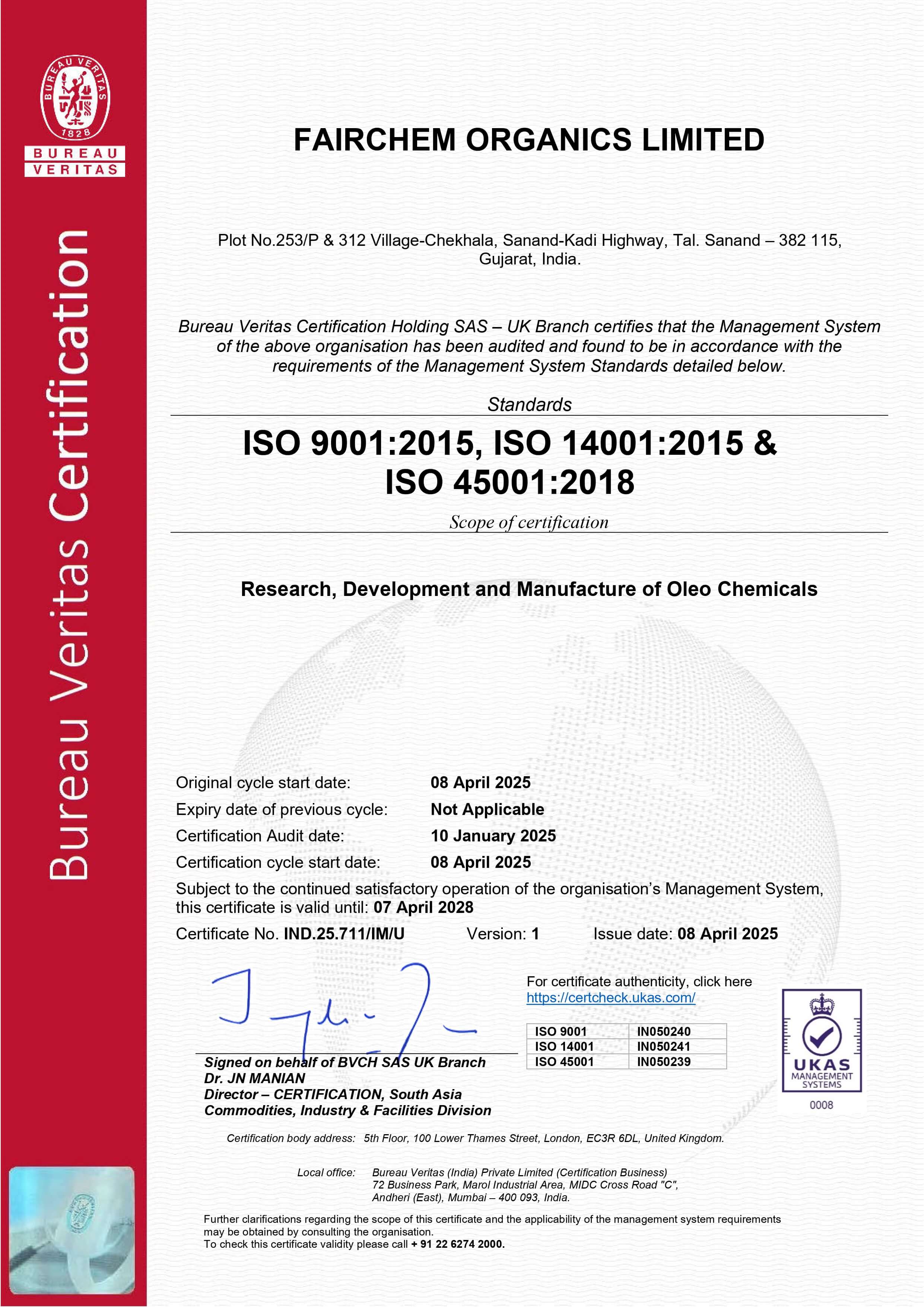
The company holds certifications including REACH Compliance, HALAL, Kosher, DUNS, and Bureau Veritas Certification, supporting supply to regulated industries globally.
Planning to Source Dimer Acid for Your Formulation?
Whether you are a coatings manufacturer working on anti-corrosion systems, a printing ink producer evaluating domestic suppliers, or an adhesive formulator assessing bio-based raw material options, Fairchem Organics Limited has the product, certifications, and technical expertise to support your requirements.
Get in touch with the Fairchem team to discuss your application needs, request product specifications, and receive pricing based on your volume requirements.
For sales enquiries: comm@fairchem.in
Call us: +91 2717-687900 / 687901 | +91 90163 24095
Frequently Asked Questions
Q1: What is the difference between dimer acid and regular fatty acids?
Regular fatty acids are single-chain organic acids derived from the fat-splitting of vegetable oils or animal fats. Dimer acid is produced by chemically joining two unsaturated fatty acid molecules together, creating a significantly larger molecule with two acid groups. This dual functionality makes it useful as a building block in polymer, resin, and curing agent chemistry in ways that single-chain fatty acids cannot match.
Q2: Is dimer acid bio-based?
Yes. Dimer acid is produced from unsaturated fatty acids derived from renewable vegetable oil sources. It is considered a bio-based chemical and is increasingly preferred by industries with sustainability commitments that require them to document the bio-based content of their raw material inputs.
Q3: Which industries in India use dimer acid?
The primary users in India are paints and protective coatings manufacturers, printing ink producers, adhesive and sealant formulators, lubricant manufacturers, and polyamide and nylon producers. Automotive, packaging, and infrastructure sectors are the end-use industries driving this demand.
Q4: What should I look for when evaluating a dimer acid supplier?
Key factors include product consistency across batches, acid value and colour grade specifications, certification credentials for regulated markets, production capacity relative to your volume requirements, and technical support capability for application-specific guidance.