
Menu
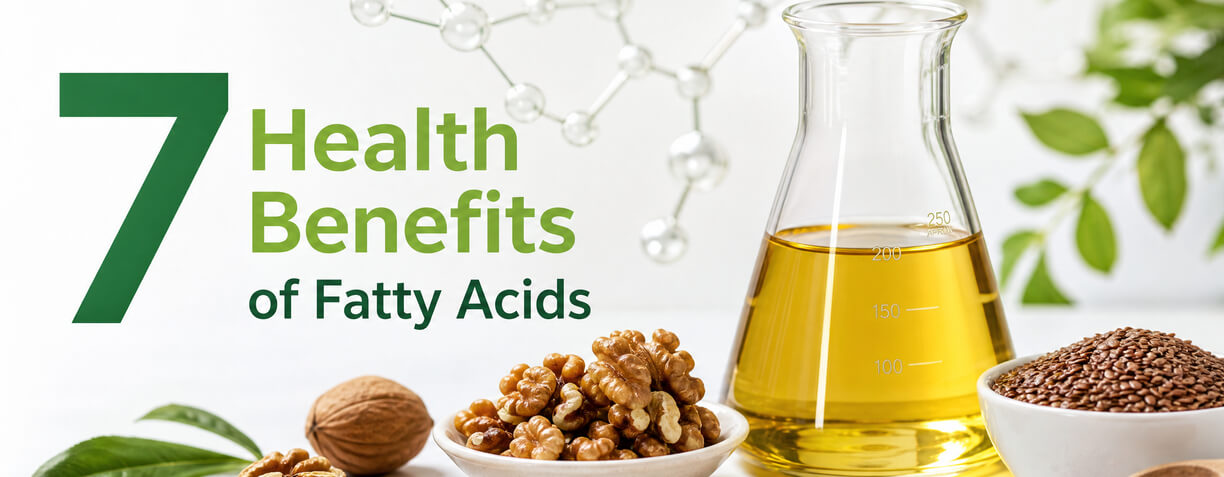
7 Health Benefits of Fatty Acids
Your Body Needs Fatty Acids More Than You Think
Most people hear the word “fat” and immediately think it is something to avoid. But not all fats work the same way inside your body. Fatty acids, which are the building blocks of dietary fats, are among the most essential nutrients your body relies on every single day.
From keeping your heart running efficiently to supporting your brain, skin, and immune system, fatty acids do a remarkable amount of work behind the scenes. And yet, a large portion of the global population is not getting enough of the right ones.
In this blog, we cover 7 science-backed health benefits of fatty acids, what types matter most, and how quality sourcing of fatty acid products connects the health of people to the work of responsible manufacturers and suppliers in the chemical industry.
First, What Are Fatty Acids?
Fatty acids are organic compounds made of carbon, hydrogen, and oxygen atoms arranged in chains. They are the core structural units of fats and oils found in both food and industrial products.
They are broadly classified into three categories:
Saturated fatty acids have no double bonds in their carbon chain. Examples include stearic acid and palmitic acid. These are commonly found in animal fats and tropical oils.
Unsaturated fatty acids have one or more double bonds. Monounsaturated (like oleic acid) and polyunsaturated (like linoleic acid and omega-3s) fall in this group. These are found in vegetable oils, nuts, seeds, and fish.
Branched-chain fatty acids like isostearic acid have a non-linear carbon structure. While less common in food, they are widely used in cosmetic, pharmaceutical, and industrial applications.
Each type plays a different role, and understanding which ones your body needs is the first step to making informed health decisions.
Benefit 1: Heart Health Support
Omega-3 and omega-6 polyunsaturated fatty acids are among the most researched nutrients when it comes to cardiovascular health. Regular intake of these fatty acids has been associated with reduced levels of triglycerides, improved HDL (good cholesterol) levels, and lower systemic inflammation.
Linoleic acid, a key polyunsaturated fatty acid derived from vegetable oils, plays a central role here. It is one of the primary fatty acids that fatty acid manufacturers in India produce at industrial scale for use in food-grade and nutraceutical applications.
For people in India where cardiovascular disease remains a leading health concern, ensuring adequate intake of the right fatty acids through diet or supplementation is a meaningful step.
Benefit 2: Brain Function and Mental Clarity
Your brain is nearly 60 percent fat by dry weight. A significant portion of that fat is made up of fatty acids, particularly DHA (docosahexaenoic acid), an omega-3 fatty acid. DHA supports the structural integrity of brain cell membranes and is critical for signal transmission between neurons.
Low levels of essential fatty acids have been linked to cognitive decline, poor concentration, and mood instability. Adequate intake supports sharper focus, better memory retention, and overall mental well-being.
This is one of the reasons why nutraceutical and pharmaceutical companies globally source high-purity fatty acid fractions from reliable fatty acid suppliers to formulate brain health supplements and functional food products.
Benefit 3: Skin Barrier and Moisturisation
Fatty acids are a core component of the skin’s natural barrier. They maintain the lipid structure of the outer skin layer, which controls moisture retention and protects against environmental damage.
Linoleic acid deficiency, in particular, is known to cause dry, scaly, and inflamed skin. This is why it appears in almost every serious skincare formulation worldwide.
From a manufacturing standpoint, cosmetic-grade fatty acids sourced from fatty acid manufacturers are processed to pharmaceutical and personal care quality standards to ensure safety, stability, and efficacy in skin products. Companies that function as top specialty chemical companies in India play a direct role in enabling these formulations at scale.
Benefit 4: Anti-Inflammatory Properties
Chronic inflammation is at the root of many modern health conditions including arthritis, diabetes, heart disease, and certain cancers. Omega-3 fatty acids, in particular, are well-documented for their anti-inflammatory action. They compete with pro-inflammatory omega-6 compounds at the cellular level and help regulate the body’s inflammatory response.
Getting the right balance of omega-3 to omega-6 in your diet is one of the most practical ways to manage chronic low-grade inflammation. Most people in urban India and globally consume far more omega-6 than omega-3, making conscious dietary adjustment or supplementation important.
Benefit 5: Hormone Regulation
Fatty acids serve as precursors for hormone-like compounds called eicosanoids, which regulate a wide range of biological functions including blood pressure, immune response, and reproductive health. Without adequate dietary fat intake, the body struggles to produce these compounds in sufficient quantities.
Essential fatty acids also support the production of sex hormones and adrenal hormones. This is why extremely low-fat diets are often associated with hormonal imbalances, irregular cycles in women, and reduced testosterone in men.
Benefit 6: Absorption of Fat-Soluble Vitamins
Vitamins A, D, E, and K are fat-soluble. This means they cannot be absorbed by the body without the presence of dietary fats. If you are eating a diet very low in healthy fats, you may be deficient in these vitamins even if you consume them in adequate amounts through food.
Vitamin E, in particular, is closely connected to fatty acid metabolism. Tocopherols, the active forms of Vitamin E, are often found alongside fatty acids in plant oils. The importance of tocopherols in nutrition and health has driven growing demand for high-quality tocopherol ingredients. A tocopherol manufacturer that produces pharmaceutical or food-grade tocopherol concentrates plays an important role in enabling supplement and functional food formulations that support this nutritional need.
Benefit 7: Immune System Strengthening
Fatty acids directly influence immune cell function. Saturated fatty acids play a role in the structural integrity of immune cell membranes, while polyunsaturated fatty acids help regulate the production of cytokines, which are proteins that coordinate the immune response.
Research has shown that omega-3 supplementation can improve immune responses in adults, particularly in conditions of stress or nutrient depletion. A diet that includes a healthy balance of fatty acid types supports a more resilient and responsive immune system.
The Connection Between Health Benefits and Quality Manufacturing
Reading through these seven benefits, one thing becomes clear. The quality of fatty acids whether consumed through food, supplements, or applied through skincare products, depends heavily on the quality of the raw materials and manufacturing processes behind them.
Fatty acids used in nutraceuticals and pharmaceuticals must meet strict purity, safety, and stability standards. This requires advanced processing technology, rigorous quality control, and compliance with international standards like REACH, Kosher, HALAL, and food-grade certifications.
This is where reliable fatty acid manufacturers in India and globally make a real difference. The integrity of the raw material supply chain directly determines the efficacy and safety of health products reaching consumers.
Fairchem Organics Limited: Where Industrial Chemistry Meets Health Applications
Fairchem Organics Limited, based in Sanand, Ahmedabad, is one of the established names among fatty acid suppliers and oleochemical manufacturers in India. Founded in 1995, the company operates a 120,000 MTPA manufacturing facility producing high-quality fatty acid derivatives from renewable vegetable oil sources including soya, sunflower, corn, rice bran, and rapeseed.
Its product portfolio includes Stearic Acid, Palmitic Acid, Linoleic Acid, Isostearic Acid, Dimer Acid, and Distilled Fatty Acids, all manufactured to meet domestic and global quality standards. Fairchem also produces nutraceutical-grade ingredients including tocopherol concentrates, making it one of the few companies in India that bridges industrial oleochemicals and health-focused specialty ingredients.
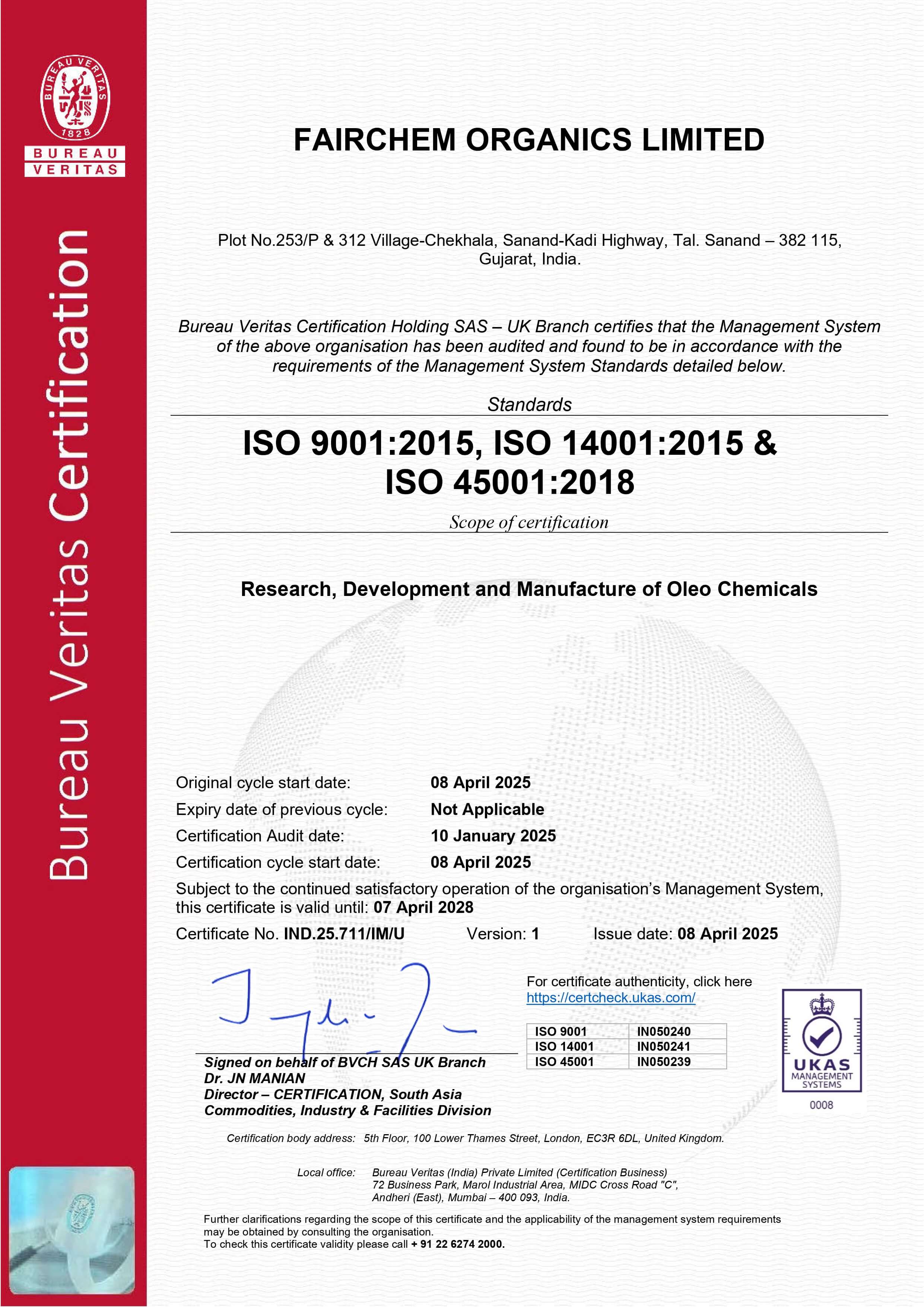
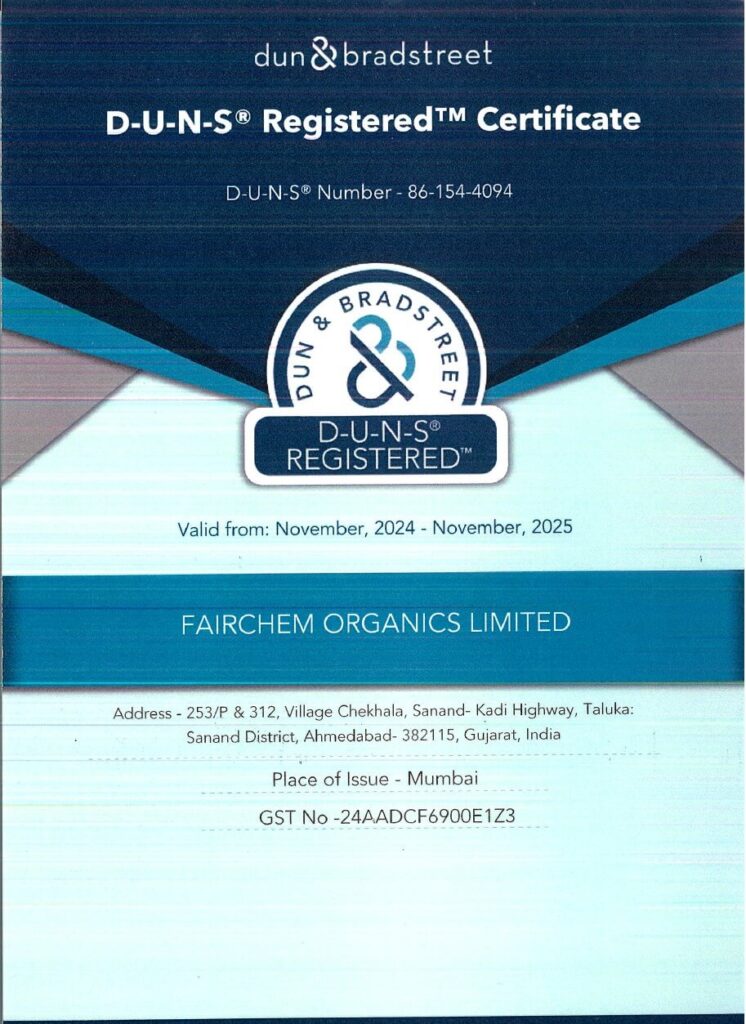
As one of the top specialty chemical companies in India, Fairchem holds certifications including REACH, HALAL, Kosher, DUNS, and Bureau Veritas, supporting its role as a trusted supplier to both regulated Indian industries and export markets across Asia, Europe, and the Americas.
Looking for High-Quality Fatty Acid Products?
Whether you are a nutraceutical formulator, a personal care manufacturer, or an industrial buyer looking for consistent fatty acid supply, working with a certified and experienced producer makes all the difference.
Fairchem Organics Limited is equipped to support your requirements with certified product quality, technical expertise, and reliable supply from its manufacturing base in Sanand, Ahmedabad.
For sales enquiries: comm@fairchem.in
Call us: +91 2717-687900 / 687901 | +91 90163 24095
Reach out today for product specifications, certifications, and pricing tailored to your application.
Frequently Asked Questions
Q1: Are all fatty acids good for health?
Not equally. Unsaturated fatty acids, particularly omega-3s and omega-6s in the right ratio, offer the most documented health benefits. Saturated fatty acids in moderate amounts are generally fine, but excess intake from processed foods can be harmful.
Q2: What is the best dietary source of essential fatty acids?
Flaxseed, chia seeds, walnuts, fatty fish, and cold-pressed vegetable oils like sunflower and soybean oil are good sources. For therapeutic doses, high-quality omega-3 supplements are commonly used.
Q3: What is the difference between fatty acids and fats?
Fats (triglycerides) are made up of three fatty acid chains attached to a glycerol molecule. When fats are broken down during digestion or industrial processing, they release individual fatty acids.
Q4: How do industrial fatty acids differ from those in food?
Industrial-grade fatty acids are processed for performance properties like lubricity, stability, and chemical compatibility. Food and nutraceutical grades are refined to strict purity standards safe for human consumption. The raw material source is often the same, but the processing, testing, and certification differ significantly.